
 Lorem ipsum dolor sit amet, consectetur adipiscing elit, sed do eiusmod tempor incididunt ut labore et dolore magna aliqua.
 Gravida dictum fusce ut placerat orci. In ornare quam viverra orci sagittis. Fermentum dui faucibus in ornare quam. Purus viverra accumsan in nisl nisi scelerisque eu ultrices. Non nisi est sit amet facilisis magna. Nunc consequat interdum varius sit amet. In ornare quam viverra orci sagittis eu. Id diam maecenas ultricies mi eget. Felis imperdiet proin fermentum leo vel orci porta non pulvinar. Praesent elementum facilisis leo vel fringilla est.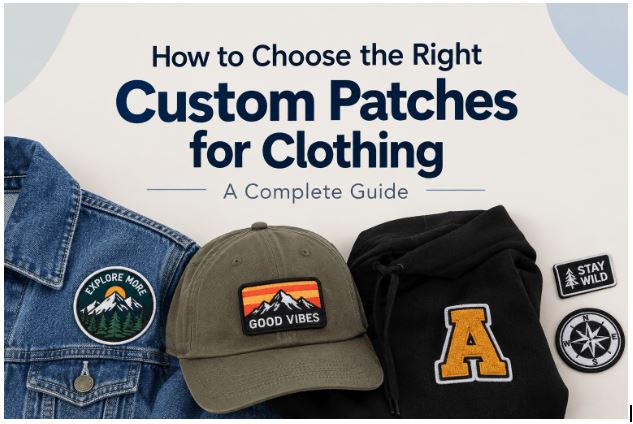
Whether you are ordering a few personalized custom patches for a small clothing project or hundreds for a brand, team or organization, choosing the right construction method before production can save time, money and disappointment.
Start With the Artwork
Your artwork should influence the type of patch you choose, not the other way around.
A bold logo with large lettering can work very well as an embroidered patch. A design containing very small text, thin outlines or tightly packed details may be better suited to woven construction. A simple emblem intended for outdoor equipment may work especially well as PVC.
This matters because embroidery relies on threads and stitches to reproduce the design. Very small details can become difficult to read when the finished patch is too small. Woven patches use finer threads and a flatter construction, which can make them a better choice for detailed artwork.
Before ordering, look at the smallest elements in your design and ask whether they actually need to remain visible in the finished patch. Simplifying a logo can sometimes produce a much cleaner result than trying to reproduce every tiny detail.
Embroidered Patches: The Classic Clothing Choice
Embroidered patches remain a natural choice for jackets, uniforms, hats, shirts, clubs, teams and branded apparel because of their raised texture and traditional appearance.
They work particularly well when the design has clear shapes, bold lettering and a moderate level of detail. The stitched surface gives the patch a textured appearance that printed or flat constructions cannot completely replicate.
The main consideration is detail. If your artwork contains tiny lettering, very thin lines or photographic elements, ask whether the design should be simplified or whether another patch construction would reproduce it more accurately.
When comparing custom embroidered patches, look beyond the product photo. Ask about the artwork preparation, proofing process, backing options, thread colours and the final patch size. Those details have a direct effect on how the finished patch will look on clothing.
Woven Patches: Better for Fine Details
Woven patches are made differently from embroidered patches. Instead of creating the design primarily through raised stitches, the artwork is formed into a flatter woven surface.
That makes woven patches useful when the design contains small text, fine lines or detailed shapes that may not translate cleanly into conventional embroidery.
They are especially useful for clothing brands, labels, detailed logos and designs where a smooth, low-profile appearance is preferred.
The tradeoff is visual texture. If you want the traditional raised look associated with embroidered patches, woven may not give you the same effect. The best choice depends on whether detail or texture is more important for the project.
PVC Patches: A Different Approach for Hard-Wearing Gear
PVC patches are a popular option when the finished patch needs a more flexible, molded appearance.
They can be useful for backpacks, outdoor gear, work equipment, sports products and other applications where a patch may encounter moisture, dirt or repeated handling.
The design style is also different from embroidery. PVC works particularly well with bold shapes, clean lines and raised details. It is less about creating a textile texture and more about producing a durable, structured patch.
For clothing brands, PVC can also provide a modern look when you want something that feels different from traditional thread-based patches.
Chenille Patches: Best for Bold, Textured Designs
Chenille is instantly recognizable because of its soft, raised texture. It is strongly associated with varsity jackets, school sports and large lettering.
This material works best when the design itself is bold. Large initials, simple logos, numbers and athletic lettering can look excellent in chenille.
Trying to reproduce a highly detailed logo in a small chenille patch, however, may not produce the result you expect. The texture that makes chenille attractive can also make very fine details less suitable.
For large jacket graphics, team identities and statement pieces, chenille can be one of the most visually distinctive choices.
Do Not Ignore the Backing
Choosing the material is only part of the decision. The backing determines how the patch will be attached to the garment and how practical it will be for the intended use.
Iron-on backing is convenient for many clothing applications because it can be applied with heat. Sew-on backing provides a more traditional permanent attachment and is useful when the garment will be washed or heavily used. Hook and loop backing is practical when a patch needs to be removed or replaced.
There is no universal backing that is right for every garment.
A patch going onto a lightweight fashion item may need a different approach from one being attached to a heavy work jacket. The fabric itself also matters. Before ordering, tell the manufacturer what type of garment you are using so the backing can be selected accordingly.
Size Can Change the Entire Result
Two identical logos can look completely different when produced at different sizes.
A design with small text might be perfectly readable on a four-inch patch but become difficult to reproduce at two inches. A large logo may look impressive on the back of a jacket but feel oversized on a shirt pocket.
Think about placement before deciding the dimensions.
Common clothing placements include:
- Left chest
- Jacket back
- Sleeve
- Hat front
- Shoulder
- Pocket area
- Hoodie or sweatshirt front
- Backpack panel
Measure the actual area where the patch will be placed. A design that looks balanced on a computer screen may feel crowded once it is attached to the garment.
Quantity Matters More Than Many Buyers Expect
The number of patches you need can affect pricing, production options and the overall ordering process.
A clothing brand preparing a launch might need hundreds of patches, while an individual customer may only need a small batch. Team and club orders can fall somewhere in between.
This is why it is worth asking manufacturers about minimum order requirements before spending time preparing artwork.
Some buyers search specifically for custom patches USA no minimum because they do not want to commit to a large production run. Others are looking for a custom patch manufacturer that can handle larger quantities consistently.
The important thing is to find a supplier whose production setup matches the size of your project.
What to Check Before Approving a Patch Proof
The digital proof is one of the most important stages of a custom patch order.
Before approving it, check:
The dimensions: Make sure the width and height match what you actually need.
The spelling: Small wording mistakes are easy to overlook when focusing on colours and shapes.
The colours: Screen colours can appear differently from physical thread or material colours, so confirm the selected colours rather than relying entirely on your monitor.
The border: Look at how the outer edge interacts with the artwork and whether the shape suits the garment.
The backing: Confirm that the chosen backing is appropriate for the fabric and expected use.
The smallest details: Check whether every element of the artwork actually needs to appear at the selected size.
If something looks questionable in the proof, ask about it before production begins. Fixing an artwork issue after a large batch has been manufactured is much more difficult than fixing it during the proofing stage.
Custom Patches for Different Types of Clothing
The best patch depends heavily on the garment and its purpose.
For team and varsity jackets, chenille and embroidered patches are common choices because both can create a strong, traditional identity.
For workwear and uniforms, embroidered patches are useful when the goal is a professional appearance with readable logos, names or department information.
For streetwear and fashion brands, woven patches can work well for detailed logos and labels, while PVC can create a more modern appearance.
For hats and caps, smaller embroidered designs are often practical because the patch needs to fit within a limited area.
For backpacks and outdoor gear, PVC or hook and loop options may be worth considering depending on the way the product will be used.
The important point is that there is no single best patch for every application.
What Makes a Good Patch Manufacturer?
When searching for custom patch makers in USA, do not judge a company only by the lowest quoted price.
Look at how they handle artwork, whether they provide a proof before production, how clearly they explain material and backing choices, what quantity they can produce and whether their previous work matches the standard you expect.
A good patch maker should also be able to tell you when your chosen design is not suitable for the production method you selected.
That can be more valuable than simply accepting every design without question.
It is also worth checking whether the manufacturer can handle both small and bulk orders. A company that can produce USA custom made patches for an individual project may have a different production setup from one focused mainly on large commercial orders.
How to Order Custom Patches Without Overcomplicating the Process
A simple process usually works best:
First, prepare your artwork and decide where the finished patch will be used.
Next, choose the material based on the level of detail, appearance and durability you need.
Then select the size, shape and backing.
After that, review the digital proof carefully and request any necessary changes.
Finally, approve production only when the design, dimensions, backing and quantity are correct.
This approach is useful whether you are searching for custom patches near me, comparing online patch manufacturers or looking for a supplier that serves customers across the USA.
The goal is not simply to find a patch at the lowest possible price. It is to order a patch that suits the artwork, garment and intended use from the beginning.
Final Thoughts
Choosing custom patches is really a design and application decision. Embroidery gives you a classic textured appearance. Woven patches offer a flatter finish that can work well for detailed artwork. PVC provides a molded, flexible option for hard-wearing applications, while chenille creates a bold, textured look that works particularly well on varsity-style garments.
The best result usually comes from matching the patch construction to the design rather than trying to make one material work for every project.
Before placing an order, think about the artwork, size, garment, backing, quantity and expected wear. A few decisions made before production can make a significant difference in the final result.